Emonika project
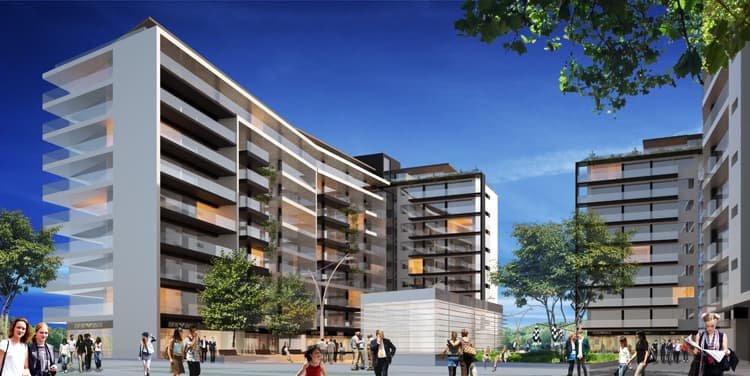
In Roman times, an important commercial road was located on the northern part of of the city of Emona, which is nowadays Ljubljana’s city centre. The Emonika project wishes to become the heir to this historical legacy: a multifunctional complex that begins a dialogue with the historical traditions and buildings, forming an important part of the urban fabric and serving as a gateway to the city centre. Upon completion, it will comprise 187 residential units, two hotels, office spaces, and a shopping centre, all fully integrated into Ljubljana’s central transportation hub. The project is being developed in accordance with BREEAM sustainability standards, with the aim of creating an inclusive and future-oriented urban environment. Completion is scheduled for the end of 2027.
Since 2024, our Studio has been responsible for the general planning tasks of the P1 and P3 areas of the Emonika project, working in close collaboration with the Slovenia-based office Elea iC. Over the long development period, several architectural offices have contributed to the project. Our Studio initially participated as an expert consultant on the development of an existing concept design and later, due to changing circumstances, took over the role of general architect and lead designer.
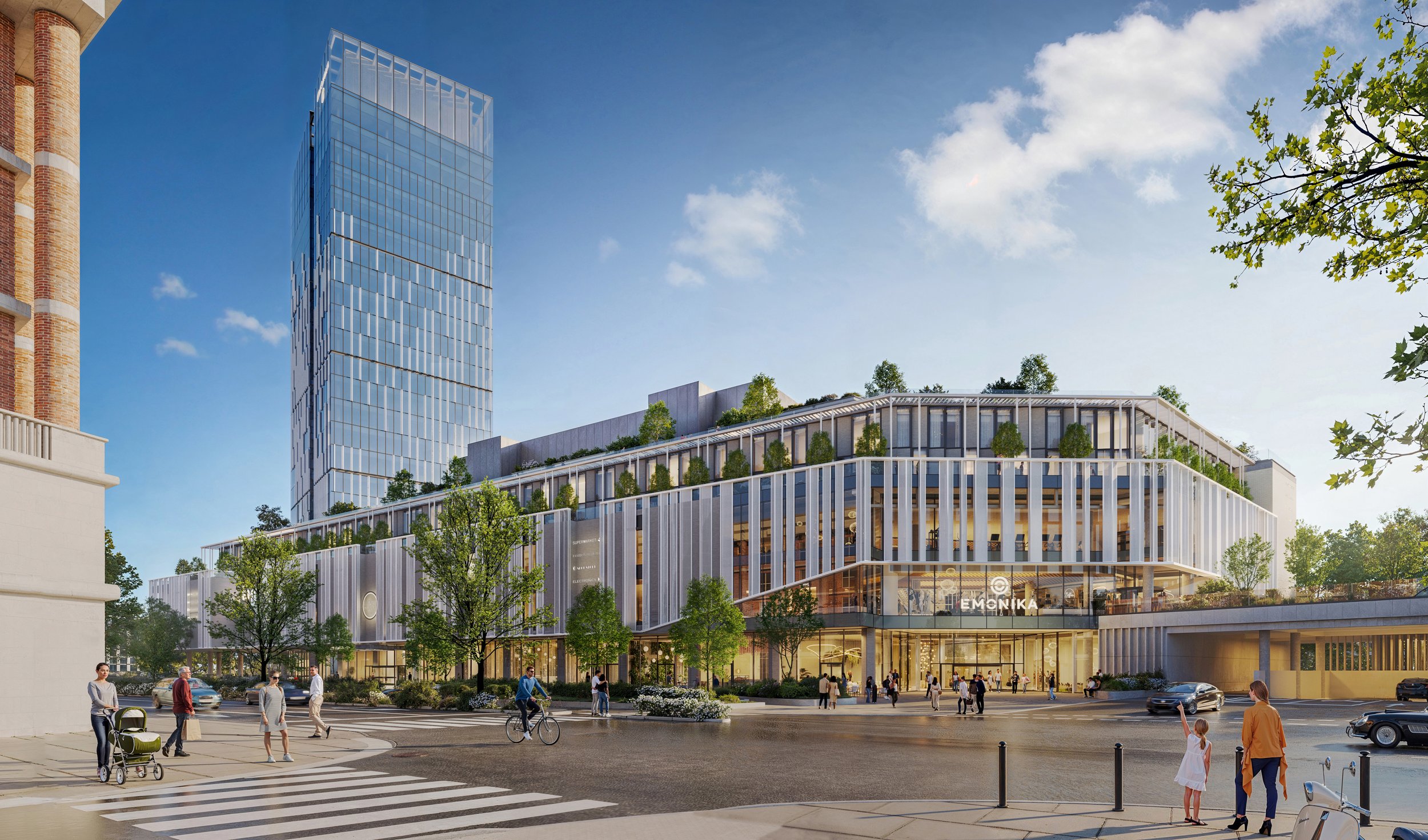
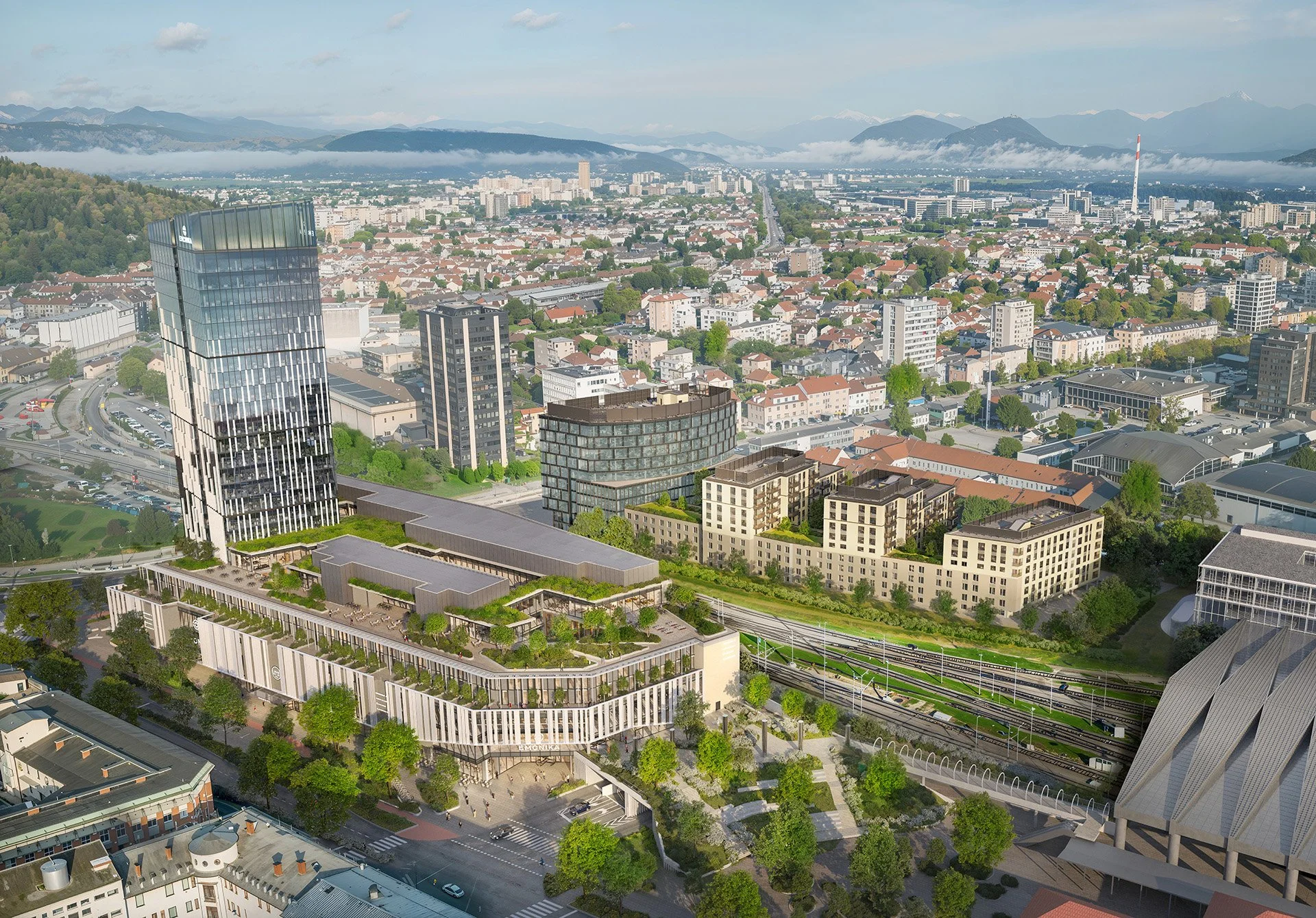
The building complex is realized in an exciting architectural context, at the boundary of several urban districts; in every respect, its role is a city-scale gateway and landmark. To the south it is bordered by the historic city centre with its rich architectural heritage, while to the north lies an office district defined by Dunajska cesta boulevard. The development site is divided by the railway area of the intermodal central station currently under construction, The P1 building connects to this via a bridge and an urban square. Due to its size and height, the complex represents an urban-scale development; its integration into the city fabric and skyline raises numerous architectural questions.
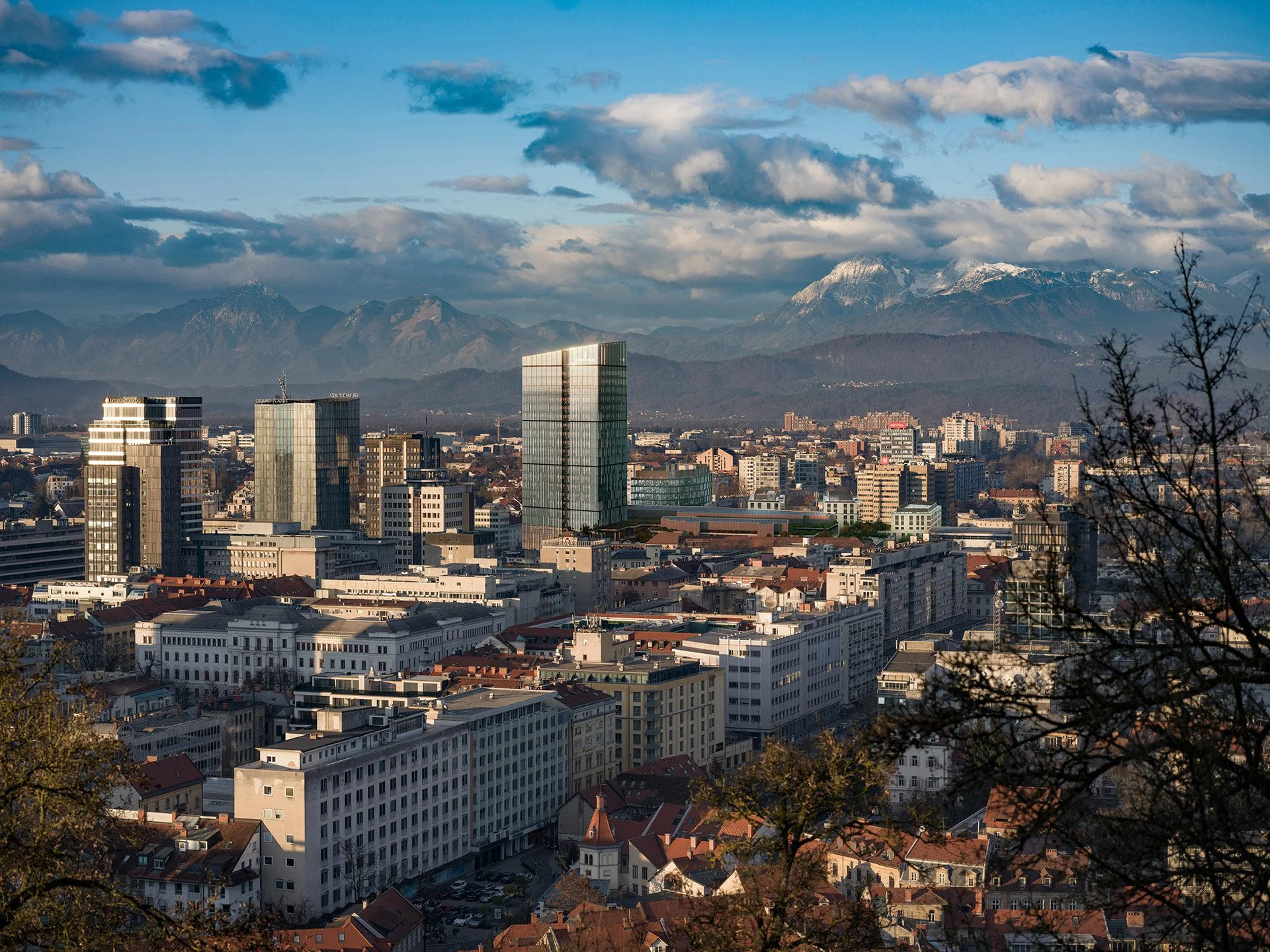
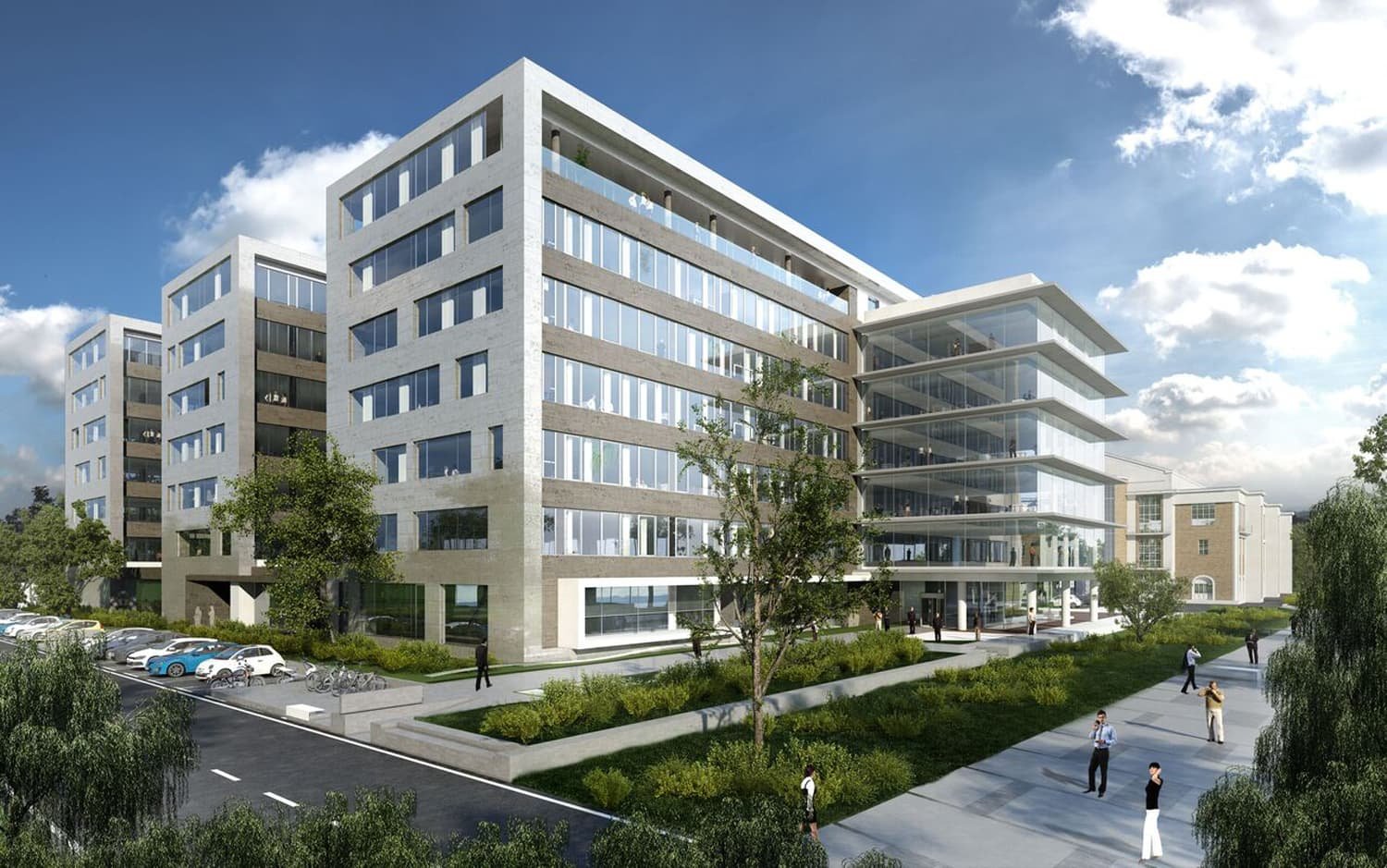
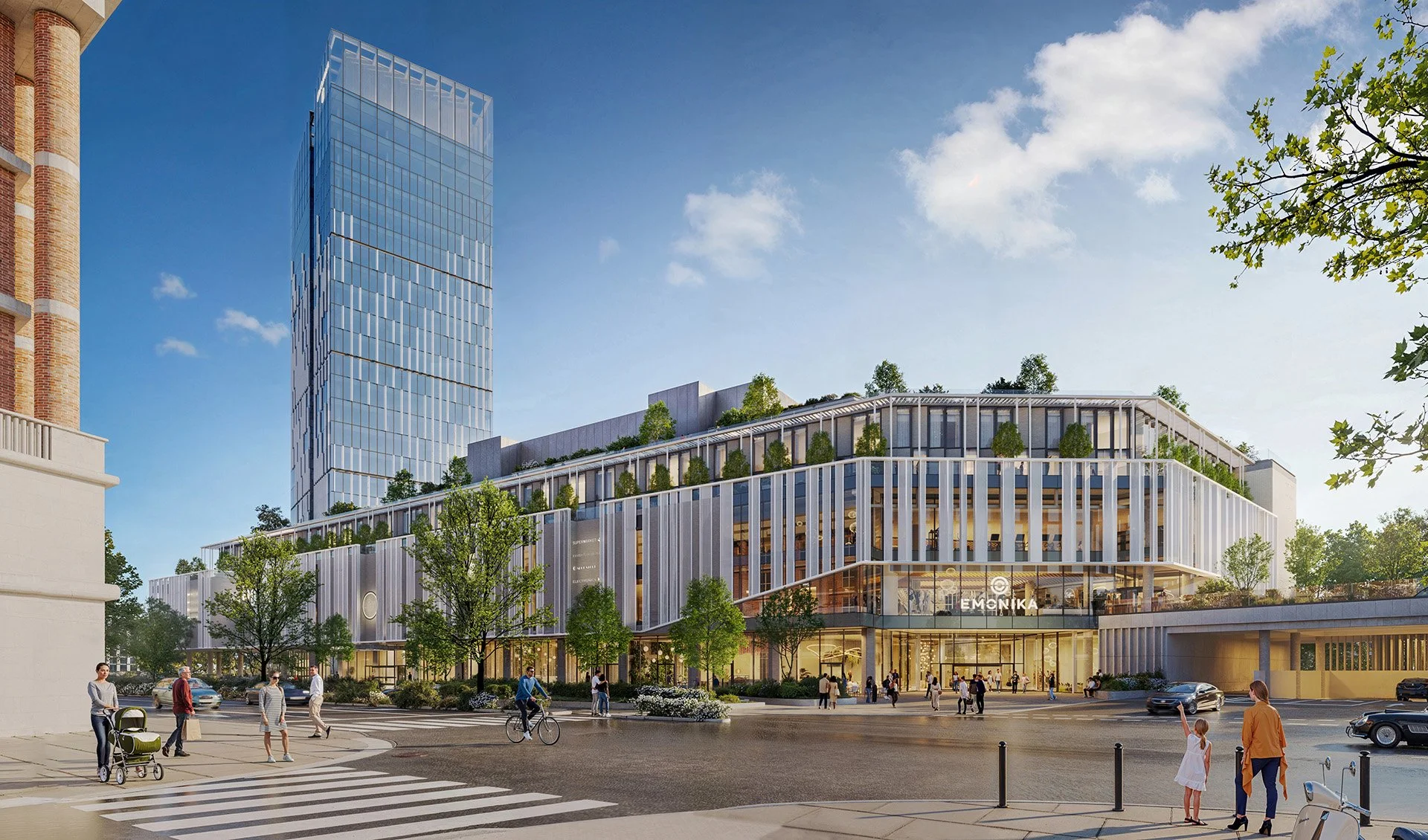
In accordance with the urban design plans, the P1 building consists of a podium and a tower rising from its western side. Owing to its placement, the tower begins a dialogue with the neighbouring high-rise buildings and -as a vertical landmark- shows the beginning of the city centre for those arriving from the north. The podium matches the height of the surrounding inner-city buildings, responding to them through its vertical articulation and volumetric composition.
To accommodate the required mechanical, logistical, and parking functions, the building is designed with four underground levels. The podium structure is formed by the vertical layering of multiple functions: the lower levels house retail units, restaurants, and entertainment venues arranged around an atrium-articulated internal plaza illuminated from above by a glass roof, while the upper levels—featuring outdoor atriums are planned to accommodate a large-scale, well-equipped conference hotel. The hotel floors step back in terraces, providing well-oriented outdoor spaces for guest rooms and hospitality functions. Unusually, the hotel’s conference rooms, restaurant, and bar are located above the guest room levels, on the fifth floor, creating a pleasant rooftop garden for these communal functions with views of the city skyline and Ljubljana Castle. The 23-story tower has a separate entrance and accommodates leasable office spaces on the levels above the podium.
The exterior appearance of the building is defined by a respectful consideration of its dialogue with the surroundings and its role in the cityscape as a landmark. The volumes are shaped to harmonize with the scale of the surrounding buildings and to respond to the force lines of adjoining streets, squares, and boulevards. The podium is formed in a stepped manner, articulated by multiple setbacks, while the tower is visually slenderized through vertical grooves. The tower volume is capped by an inclined plane, a gesture reflecting the silhouette of the mountains surrounding the city.
The design and materiality of the façade were strongly influenced by the building’s southern neighbour: a building designed by Jože Plečnik, the legendary master who most profoundly shaped Ljubljana’s architecture. The podium façade is feature cladded by a varied, vertically articulated “veil” woven from perforated metal panels, which rhythm is inspired by the neighbouring building’s façade composition. On the southern side, the hotel room façades join this interplay: the monotony inherent in the function is broken by ceramic surfaces and filigree columns composed in the rhythm of the veil. On the northern side facing the railway tracks, fewer openings are introduced for functional and acoustic reasons; these surfaces are cladded with brick -characteristic of local architecture-, providing a more solid anchor to balance the aerial play of the southern façade. The veil motif also appears on this side, complemented by green façade bands. The tower’s glass façade is adorned with a dynamic arrangement of metal fins, whose pattern gestures toward the historic city centre, Dunajska cesta, and the surrounding mountain silhouettes.
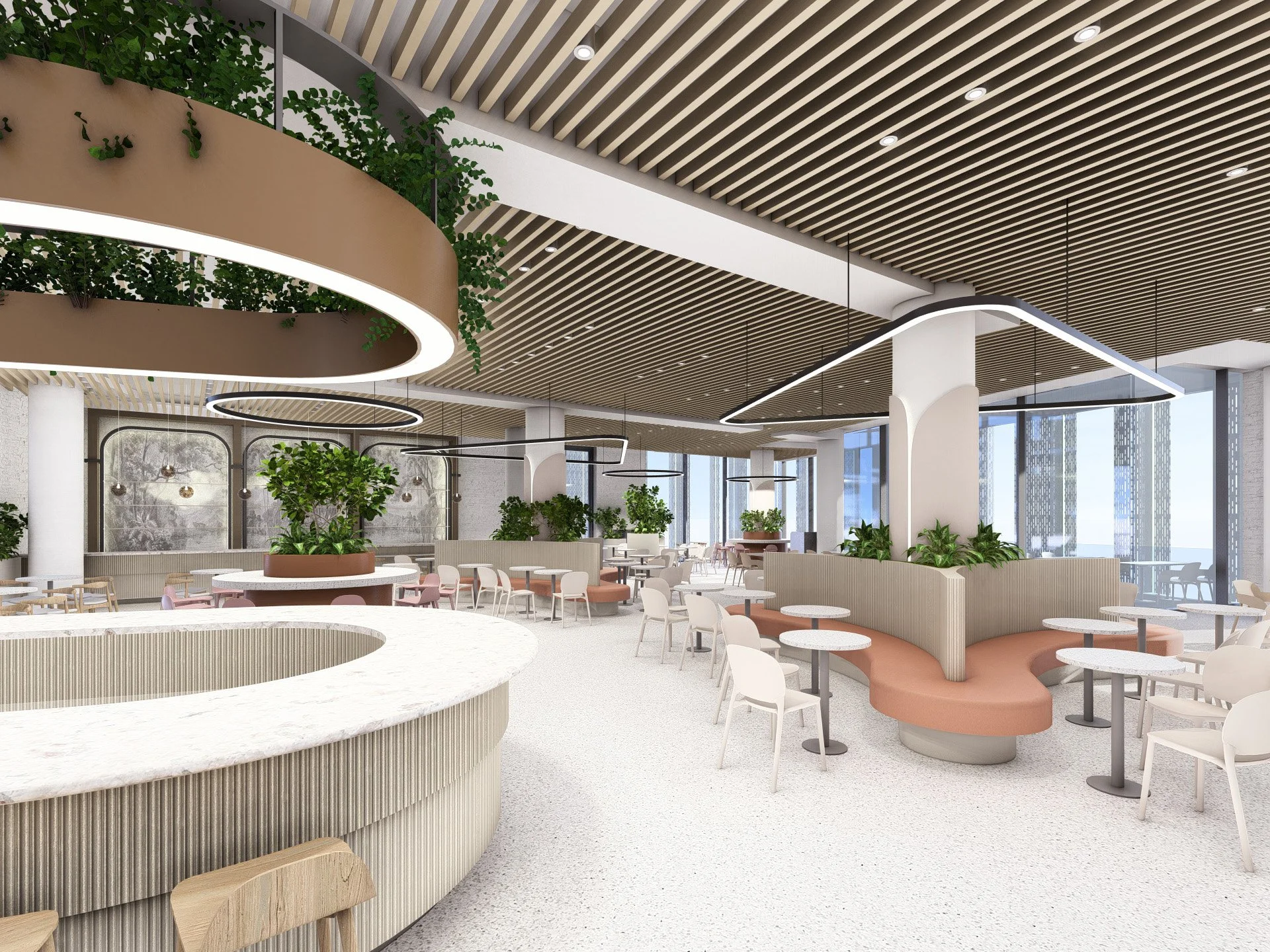
In the interior spaces, the same light, bright, and clean atmosphere characteristic of the exterior world prevails. The podium is defined primarily by the curved, city-scale plaza illuminated from above by glass roofs and atriums. The adjoining interior spaces’ geometry organically follows this grand gesture. The dominant surface treatments reinforce this concept: terrazzo flooring, glass walls, and slatted wooden suspended ceilings.
The interior design continues the architectural narrative of the project—clean, elegant, and timeless, with an emphasis on high-quality materials and spatial lightness. The material palette combines terrazzo-effect flooring, finely grooved treated ceramic wall claddings, and warm-toned slatted ceilings, together creating a refined yet inviting atmosphere.
In the food court, custom-designed fixed furniture and abundant greenery create a distinctly human-scaled, vibrant environment. Carefully selected, colourful seating elements introduce dynamism and warmth, resulting in a friendly, lively community space.
Throughout the shopping centre, custom plant containers that also function as seating, along with modular kiosk units, provide flexible retail opportunities. The overall impression is light, lively, and elegant— a contemporary yet timeless aesthetic that will retain its freshness and appeal over the long term.
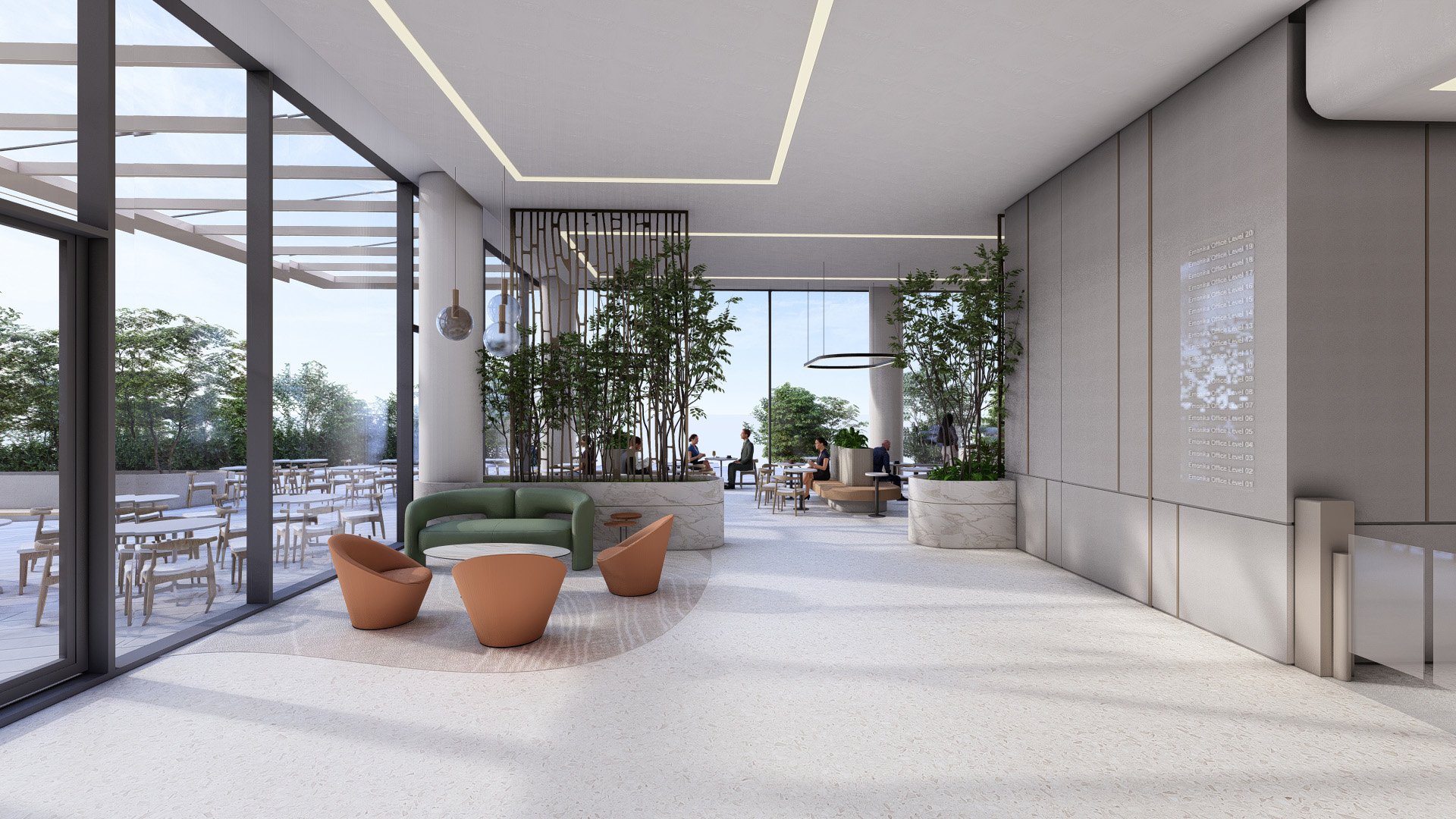
During the design process, our goal was to ensure that the building integrates organically with the surrounding green areas and urban spaces. The roof gardens and terraces speak the same language as the green areas framing the building. On the eastern side, the complex connects seamlessly to the urban square of the newly built railway station. From this square, a landscaped artificial mound incorporating an amphitheatre and stairs—concealing vehicular traffic and bicycle storage—leads to a terrace on the first floor, while a bridge provides direct access from the station.
The Emonika P1 building complex is currently in the phase of substructure construction, running in parallel with detailed design. According to the plans, handover is scheduled for 2027. Expectations are high from all sides, but we hope that the completed building will be appreciated by its users, operators, and the residents of Ljubljana alike, and will become a worthy addition to this culturally rich and beautiful city.
Project info
-
-
2027
-
2024
-
Ljubljana, Slovenia
-
Finta and Partners Architectural Studio
-
Architecture + Interior Design
-
Residential + Office
-
In progress
Architect team
-
Antal Fekete
-
Sara Aliakbari
Zoltán Tóth
Gergő Lőczi
Gábor Kiss
-
Keller-Marku Judit
Magyar Mária
Gál-Mózes Anett
Gál Bence
Sasvári Áron
Csépe Álmos
Vörös Luca
E. Honti Mariann
E. Csizi Mária
Csiszár Katalin
Pecze Anna
Zimmer Csenge
-
Gábor Mezei
-
Mendota Invest
-
Fanni Farkas